Green Box troupe
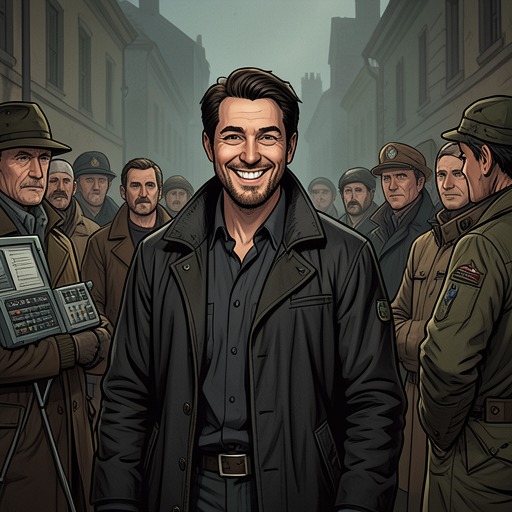
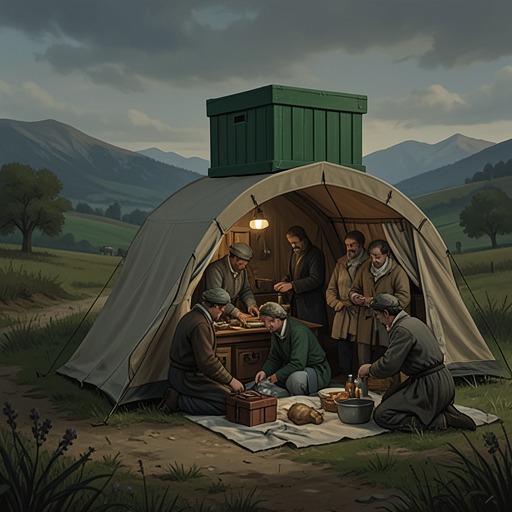
The Man Who LaughsThe Green Box troupe is an itinerant performance company whose wagon gives it both a name and a portable stage. Organized by Ursus around Gwynplaine’s public acts, it wins an audience in Southwark with a spectacle that turns Gwynplaine’s involuntary, permanent grin into a source of collective laughter. Yet its performances also place that grotesque public image beside Dea’s tenderness and Ursus’s carefully composed drama, complicating the crowd’s easy amusement.
Company and Performance
Ursus shapes the troupe’s central theatrical material as well as its practical arrangements. He writes an interlude expressly for Gwynplaine, polishing it with unusual care and treating it as the fullest expression of his talent. The piece, Chaos Vanquished, casts Gwynplaine as a man struggling against the forces of nature: a wolf plays the wolf, Ursus the bear, and Gwynplaine the man. At first the figures move in darkness, and the man is overwhelmed by the beasts. The scene builds through cries and struggle to a sudden silence before light reveals Gwynplaine’s face.
That reveal makes the audience’s response part of the performance. The sight of Gwynplaine’s fixed grin turns the preceding scene of peril into an eruption of laughter; the crowd applauds, stamps, and calls him back. The company’s attraction depends on a sharp division between performer and appearance: Gwynplaine’s face seems to laugh, but his thoughts and feelings do not follow it. Whatever emotion he experiences only intensifies the expression that the audience reads as joy. The result is comic for the spectators and profoundly at odds with the performer’s interior life.
Dea’s presence gives the spectacle another meaning. Blind, she reaches out to Gwynplaine and finds reassurance in touching him; where the audience sees a monster and assumes she is his saviour, she experiences him as the one who protects her. The same performance that makes the crowd convulse with laughter is, for Dea, renewed each evening as an occasion for love and happiness. Ursus understands this difference between the spectators’ interpretation and Dea’s experience, and the company’s stage image therefore holds together public hilarity and private devotion.
London Base and Audience
After arriving in London, the troupe establishes itself in Southwark. Ursus chooses the yard of the Tadcaster Inn because its layout suits the Green Box: the wagon can be drawn inside through the high gate and set against a wall, facing an enclosed space already arranged like a theatre. The inn’s windows serve as boxes, the paved yard as the pit, and a covered wooden balcony running along three sides as the gallery. A stable stands behind the wagon. Ursus makes arrangements with the innkeeper, Master Nicless, who insists on charging extra to admit the wolf.
The company even prepares for a socially elevated audience. Ursus furnishes a box with the inn’s best chairs and places a yellow Utrecht velvet armchair with a cherry-coloured pattern in the centre, anticipating the possible arrival of an alderman’s wife. The nobility’s compartment nevertheless remains empty. The crowds that do come are immediate and abundant: Southwark flock to see Gwynplaine, and the company’s success has no remembered parallel among mountebank performances.
Popular Success and Its Limits
The troupe’s appeal overwhelms the other attractions at the fair. Sword-swallowers and grimace-makers, tumblers, a women’s circus, and even a performing tiger lose attention to Gwynplaine. Curiosity, applause, receipts, and crowds concentrate around the Green Box; Ursus jokes that Chaos Vanquished has become Chaos Victor, claiming a share of Gwynplaine’s success while acknowledging how completely it has taken over the fairground.
The success is real but unevenly distributed. The show can be seen for a penny, and its audience is chiefly popular; fashionable spectators do not go where admission costs so little. Nor has the troupe’s local renown yet become citywide fame: Gwynplaine’s glory has not passed London Bridge. The company thus commands Southwark without yet reaching the wider recognition that its crowds might seem to promise.
The Laugh Beyond the Stage
The troupe’s performances establish a pattern that follows Gwynplaine beyond the fairground: his face can turn other people’s attention away from what he is saying or feeling. In the House of Lords, he makes a sustained effort of will to suppress the grin, but the effort is momentary. When emotion finally overwhelms him during his speech, he breaks into uncontrollable laughter, and the assembly answers with delighted, mocking laughter of its own.
That reversal clarifies what the troupe’s popular triumph both achieves and cannot control. Onstage, laughter draws crowds and brings the company its livelihood; in the Lords, the same involuntary expression helps turn a plea about poverty and suffering into amusement for the powerful. Gwynplaine names the division at the heart of his public identity: he has been made a lord, but remains connected to the poor among whom he lived. The Green Box’s central spectacle is therefore more than a successful comic act: it makes visible the distance between a person’s inward experience and the social meaning imposed on his body.